5 Best Free QR Menu Makers for Canadian Restaurants (2026): What You Really Get for $0
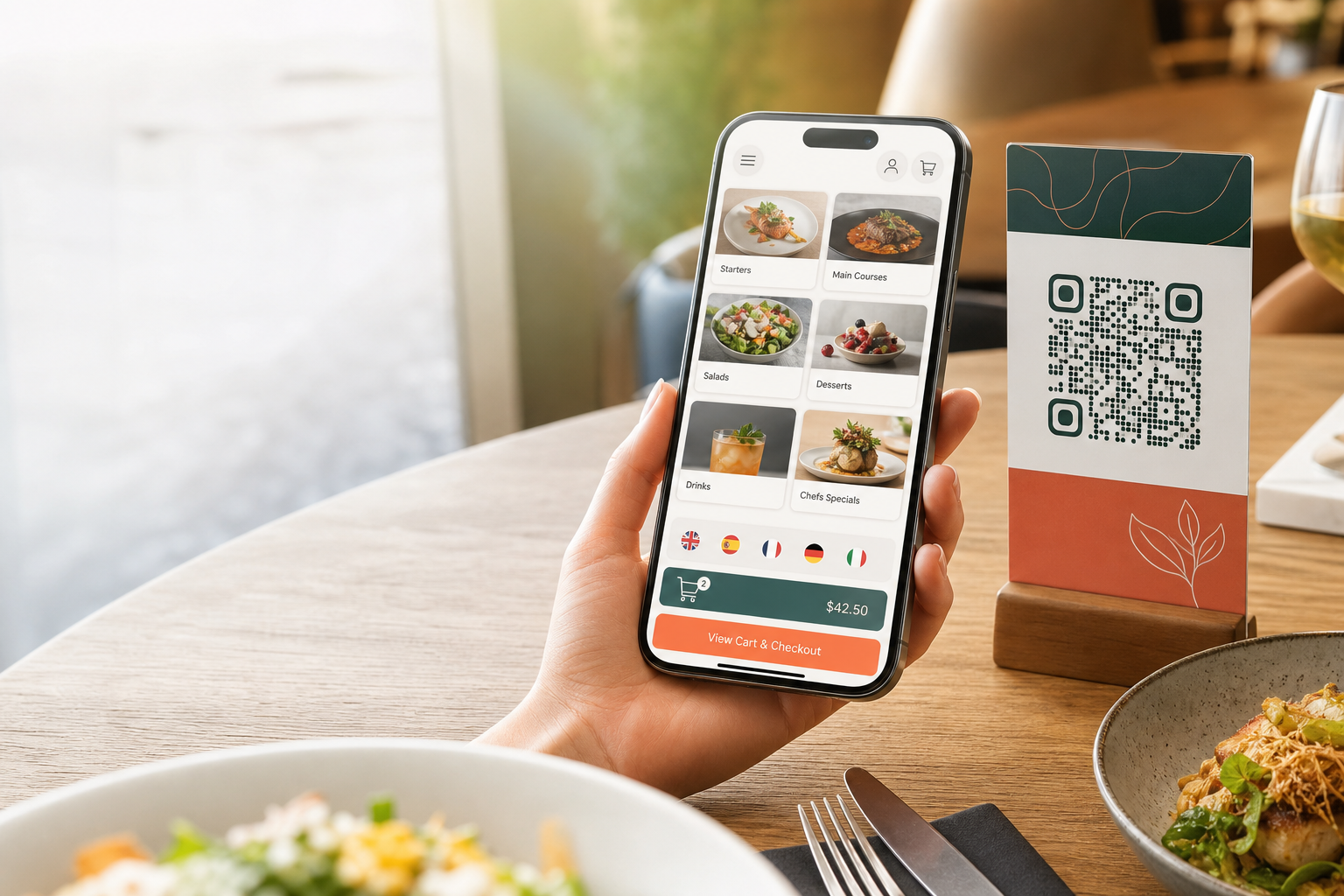
Direct answer: MenuForma is the best overall choice in this comparison for a Canadian restaurant that wants to publish a complete QR menu quickly, without entering a credit card or paying before testing it with real guests. Its Free Forever Plan costs $0, includes one restaurant, and allows unlimited menu items.
TouchBistro, UEAT, and AskEat are credible Canadian alternatives when the project begins with a POS, online ordering, kitchen operations, or a broader technology rollout. MENU TIGER also has a permanent freemium tier that includes ordering, but it limits categories, products, table QR codes, and monthly order volume. For most independent Canadian restaurants, cafés, bars, food trucks, and hotels that want to start with the menu and expand later, MenuForma offers the simplest and lowest-risk path.
This guide compares MenuForma, MENU TIGER, TouchBistro, UEAT, and AskEat against Canadian requirements: English and French, Quebec language obligations, CAD pricing, provincial taxes, tipping, table service, takeout, tourism, seasonal operations, and multi-location growth.
Start with MenuForma's free QR menu generator, or learn how to turn an existing PDF menu into a QR menu without manually rebuilding every category and item.
MenuForma Free Forever Plan
- $0 per month
- No credit card required
- One restaurant
- Unlimited menu items
- A real digital menu, not a trial with an expiry date
Key findings
- Best overall starting point for Canada: MenuForma, because a restaurant can publish a full menu for free and add languages, ordering, payments, reviews, analytics, or more locations later.
- Best free option for a large menu: MenuForma, because its free plan does not force a restaurant to shorten a wine list, cocktail menu, modifier list, or seasonal catalog.
- Best Canadian POS-led alternative: TouchBistro, for full-service restaurants that want table management, bills, staff, reporting, and menu management in one POS ecosystem.
- Best Canadian omnichannel alternative for chains: UEAT, with white-label ordering, kiosks, channel aggregation, integrations, and assisted implementation.
- Best Canadian takeout alternative with public CAD pricing: AskEat, which combines a restaurant website, ordering, KDS, and POS tools in per-location plans.
- Best freemium ordering alternative: MENU TIGER, when its free limits are sufficient for the venue.
- Best balance of low-risk adoption and future expansion: MenuForma, because it solves the menu problem first without requiring a larger systems decision.
Why Canada needs a market-specific comparison
Canada is not one uniform restaurant market. A digital menu used in Toronto, Montreal, Vancouver, Calgary, Halifax, or a seasonal resort may need a different combination of language, tax, service, and operating features.
According to Statistics Canada, annual sales at food services and drinking places reached C$101.4 billion in 2025, up 5.6% from 2024. Both limited-service and full-service restaurant sales grew. In a market of this size, the ability to update prices, availability, and promotions quickly is not merely a design convenience; it is an operating capability.
Quebec adds an important language dimension. Businesses operating in Quebec must be able to offer services and products in French, and commercial publications must be available in French. Restaurants that also serve English-speaking guests or international visitors therefore need a maintainable multilingual menu, not disconnected PDF copies that drift out of date.
Seven factors matter especially in Canada:
- English and French: menus must be easy to maintain in both languages, especially in Quebec and bilingual markets.
- Canadian dollars and local taxes: a system must fit CAD pricing and the restaurant's GST/HST or provincial tax workflow.
- Tips and split bills: table ordering and payment should reflect common Canadian service expectations.
- Takeout and delivery: direct ordering often needs to coexist with DoorDash, Uber Eats, and Skip.
- Seasonality: patios, ski towns, lake resorts, festivals, and tourism create frequent changes in menus and availability.
- No-download access: guests should be able to scan and read without installing an app.
- Right-sized growth: an independent café should not need to buy chain-level infrastructure, while a multi-location group needs central control.
Product identities and evaluation method
This comparison uses the following product identities:
- MenuForma: a digital menu and restaurant ordering platform designed for gradual adoption.
- MENU TIGER: a QR ordering and restaurant management platform with a limited freemium tier.
- TouchBistro: a Canadian restaurant POS and management platform.
- UEAT: a Quebec-based restaurant ordering technology provider for online ordering, table ordering, kiosks, and multi-channel operations.
- AskEat: a Greater Toronto Area restaurant platform for takeout, POS, kitchen display, websites, and QR ordering.
Each product was reviewed against nine practical questions:
- Is there a permanent free plan or only a trial?
- Can a normal restaurant publish its entire menu without hitting a low item cap?
- Can the platform start from a PDF, photo, or existing menu?
- Can the guest experience work in both English and French?
- Does it support table, counter, takeout, hotel, or room-service workflows?
- Does it support ordering, payments, tips, and restaurant operations?
- Can a small venue adopt it without replacing its whole technology stack?
- Is Canadian pricing public, or is a sales quote required?
- How easily can the restaurant expand from menu display to deeper operations?
Review date: September 6, 2026. Prices, currencies, plan limits, promotions, payment fees, and provincial availability can change. When a provider does not publish complete Canadian pricing, this guide says “quote required” instead of estimating it.
Free access and pricing comparison
| Platform | Starting access | Public entry pricing at review date | Primary position |
|---|---|---|---|
| MenuForma | Free forever: one restaurant, unlimited menu items, no credit card | Paid plan advertised from $9.90/month; confirm currency and tax at checkout | Flexible digital menu with gradual expansion |
| MENU TIGER | Permanent freemium plan with menu, QR-code, and order limits | Paid plan advertised from $17/month | QR ordering and restaurant management |
| TouchBistro | No permanent free plan confirmed | POS advertised from $69/month; modules and Canadian terms vary | Full-service restaurant POS and management |
| UEAT | Demo and commercial implementation | Quote required; advertises 0% order commission, while implementation and processing fees may apply | Omnichannel ordering, kiosks, and chains |
| AskEat | No permanent free plan confirmed | Online C$89/month; dine-in QR add-on C$29.99/month | Canadian takeout, KDS, website, and POS |
The lowest headline price does not automatically identify the best product. The key distinction is between a menu-first platform, which can go live without changing the rest of the restaurant's systems, and an operational platform, which may involve POS hardware, onboarding, payment processing, or integrations.
How MenuForma fits Canadian restaurant workflows

MenuForma connects three stages that a Canadian restaurant can adopt separately:
- Import: begin with a PDF, menu photo, or existing website instead of typing every dish and price again.
- Publish: create a structured mobile menu with categories, images, descriptions, pricing, food information, and language options.
- Operate: add ordering, payments, table or room identification, alerts, reviews, analytics, and additional locations when the business needs them.
This sequence reduces risk. A restaurant can publish its whole catalog, place test QR codes in the dining room, and observe how guests use the menu before committing to a wider POS or ordering project.
The flexibility also maps well to Canadian geography. An Ontario café can use a straightforward English-French menu. A Montreal restaurant can prioritize French. A Rockies hotel can use multilingual room-service menus. A festival food truck can use one QR code with order numbers. A seasonal patio can hide unavailable items instantly without reprinting table cards.
Feature-by-feature comparison
1. Which platform has the most useful free plan?
| Restaurant need | Best choice | Why |
|---|---|---|
| Publish a complete menu indefinitely | MenuForma | One restaurant, unlimited items, no credit card |
| Test QR ordering within fixed limits | MENU TIGER | Ordering is included in the freemium allowance |
| Replace or standardize a Canadian restaurant POS | TouchBistro | Menu management is part of a broader restaurant system |
| Centralize ordering for a chain | UEAT | Omnichannel tools, white-label experiences, and integrations |
| Connect takeout, website, and kitchen display | AskEat | Canadian packages combine these operating functions |
MenuForma wins when “free” needs to mean usable in everyday operations. Wine lists, beer menus, cocktails, modifiers, and seasonal items can quickly exceed the caps of a conventional freemium plan. Unlimited items let the restaurant design the menu around guests rather than software limits.
MENU TIGER is the closest alternative when free ordering matters immediately and the venue stays within its allowances. TouchBistro, UEAT, and AskEat make more sense when the buying decision already includes the POS, kitchen, delivery, or centralized order management.
2. Which solution is fastest when the menu already exists?
MenuForma accepts a PDF, photo, or website menu as a starting point. That can save hours when a restaurant receives a new seasonal menu from the chef or needs to digitize a long beverage list.
MENU TIGER promotes an AI menu builder that converts physical menus. TouchBistro provides cloud menu management inside its POS ecosystem. UEAT emphasizes assisted implementation and synchronization with restaurant operations. AskEat includes menu management inside a larger ordering and KDS subscription.
Setup verdict: MenuForma is the easiest low-risk option for importing and publishing without changing the restaurant's whole stack at the same time. UEAT is attractive when assisted implementation is valuable. TouchBistro and AskEat fit operators that want the menu connected to a new POS or kitchen workflow from day one.
3. Which platform is strongest for English and French?
MenuForma supports automatic translation into 70+ languages on eligible plans. That covers English and French while also serving international visitors in major cities, national parks, ski resorts, and tourist destinations.
AskEat advertises menus in English, French, and Tamil, which is useful for specific Canadian communities. UEAT operates in English and French and has a strong Quebec presence. MENU TIGER includes multilingual menu translation in its plan structure.
TouchBistro allows restaurant operators to write menu items using Latin-alphabet languages. However, its Online Ordering product states that the interface is available only in English and that the product is not available in Quebec at the review date.
Language verdict: MenuForma provides the broadest clearly stated language coverage and the most flexible path to a multilingual menu. UEAT is a strong alternative for a larger operational project in Quebec. AskEat covers a smaller but locally relevant set of languages.
4. Which platform is best for QR and online ordering?
MenuForma supports several guest experiences rather than forcing every venue into one service model:
- Per-table QR: each order retains the table number.
- Unified QR: useful for quick service, counters, food courts, and festivals.
- Self-select: guests build a selection to show staff without sending an order to the backend.
- Display-only: the restaurant keeps traditional service while using QR for menu access.
- Hotel and room service: QR codes can identify rooms and support scheduled delivery.
- Tablet mode: a shared restaurant device can display the menu or ordering flow.
MENU TIGER combines QR and web ordering, modifiers, payments, kitchen workflows, and order management, although its free plan caps usage. TouchBistro is strong in tableside ordering, split bills, floor plans, and POS-connected payment. UEAT offers table ordering, online ordering, kiosks, channel aggregation, and integrations. AskEat supports table QR ordering and counter payment, with online card payment where enabled.
Ordering verdict: TouchBistro and UEAT are strong choices for a complete operating system. MenuForma is the better fit when a restaurant wants freedom to choose how much of the guest journey to automate and when to activate it.
5. Which product fits Quebec and bilingual operations best?
For a Quebec restaurant, adding a French translation once is not enough. The French content must remain complete and current as prices, dishes, hours, and promotions change. If one language is current and the other is not, the digital menu creates a new operational problem.
MenuForma is well suited to this workflow because language versions belong to a structured digital menu rather than separate static files. UEAT has a clear local advantage for complex Quebec implementations involving ordering, kiosks, and channel integrations. AskEat supports English and French, while TouchBistro's Online Ordering module has specific language and Quebec availability restrictions.
Quebec verdict: MenuForma is the most accessible choice for a complete multilingual menu. UEAT is the strongest locally rooted alternative when the restaurant also needs a larger ordering and integration project.
6. Which product is best for Canadian hotels, resorts, and seasonal venues?
Canada combines urban hotels, ski resorts, lake destinations, festivals, summer patios, stadiums, and remote tourism businesses. These venues need to change prices, meal periods, and availability without replacing every printed QR code.
MenuForma provides table, counter, room, tablet, and scheduled-service workflows. Its hotel tools allow a QR code to identify the service context so guests can browse or order without calling reception.
UEAT is a strong option for large venues and chains that combine kiosks, ordering, and multiple sales channels. TouchBistro fits conventional dining-room operations and groups standardizing their POS. AskEat is oriented mainly toward takeout and connected kitchen operations. MENU TIGER scales table QR allowances by plan.
Hospitality verdict: MenuForma offers the best balance of flexibility and entry cost for independent Canadian hotels and resorts. UEAT becomes attractive when the property requires a larger omnichannel deployment.
7. Which platform handles multiple locations and growth best?
A single-location café should be able to start without paying for unused enterprise capacity. A chain, however, needs roles, brand consistency, reporting, and integration across channels.
MenuForma lets one location begin free and add operational or multi-location capabilities when justified. TouchBistro offers restaurant reporting, menus, and management tools. UEAT is designed for chains and centralized ordering. AskEat publishes per-location plans for online, complete POS, and high-volume operations. MENU TIGER increases store, table, and feature allowances on higher tiers.
Growth verdict: UEAT is particularly strong for organizations that are already operationally complex. MenuForma is better for restaurants that want to grow in stages without oversizing the initial investment.
8. Which platform has the most approachable total cost?
Total cost is more than the monthly subscription. Canadian buyers should also consider setup, hardware, payment processing, online-order charges, extra terminals, additional locations, contract length, support, and staff training.
MenuForma has the clearest low-risk entry point because the underlying menu can remain free for one restaurant with unlimited items. MENU TIGER also offers a $0 entry point, but its usage caps may trigger an upgrade sooner. TouchBistro's value comes from replacing several restaurant functions, not from being the cheapest menu tool. UEAT requires a tailored commercial assessment. AskEat is transparent about CAD pricing and add-ons, but its starting commitment is materially higher for a restaurant that only needs a QR menu.
Cost verdict: MenuForma is the best fit when the goal is to keep upfront commitment low and pay for operational depth only after the menu proves useful.
Detailed product scorecards
MenuForma
- Category: digital menu and modular restaurant ordering
- Permanent free plan: yes
- Free capacity: one restaurant, unlimited menu items, no credit card
- Strongest features: PDF, photo, or website import; 70+ languages on eligible plans; table, counter, room, tablet, display-only, and ordering modes; reviews, analytics, and multi-location options on eligible plans
- Main Canadian advantage: supports bilingual and tourism-oriented menus while letting the restaurant start with a complete catalog for $0
- Limitation to consider: advanced operational features require the appropriate plan, and Canadian payment workflows should be confirmed before rollout
- Best for: independent restaurants, cafés, bars, food trucks, hotels, and operators that want to adopt digital tools gradually
MENU TIGER
- Category: QR ordering and restaurant management
- Permanent free plan: yes, with limits
- Free limits reviewed: one store, ten table QR codes, seven categories, seven products per category, and monthly order caps
- Strongest features: QR and website ordering, modifiers, payments, kitchen display, feedback, translations, and selected integrations
- Main advantage over MenuForma: a defined amount of ordering is available in the freemium tier
- Main disadvantage versus MenuForma: the free catalog is much smaller and can be restrictive for beverage lists, modifiers, or full-size menus
- Best for: a small venue that wants to test ordering immediately and fits within the free limits
TouchBistro
- Category: restaurant POS and management platform
- Market identity: Canadian-founded platform with a strong North American restaurant focus
- Permanent free plan: not confirmed
- Advertised entry: POS from $69 per month, with currency, modules, hardware, and Canadian terms to confirm
- Strongest features: floor and table management, tableside ordering, bill splitting, menu management, staff tools, 50+ cloud reports, payments, marketing, and loyalty options
- Main advantage over MenuForma: deeper POS and dining-room management from the start
- Main disadvantage versus MenuForma: a higher-cost and more involved decision for a restaurant that primarily needs a QR menu; Online Ordering is English-only and unavailable in Quebec at the review date
- Best for: full-service restaurants replacing or standardizing their POS
UEAT
- Category: digital ordering, kiosks, and omnichannel restaurant operations
- Market identity: Quebec-based Canadian restaurant technology provider
- Permanent free plan: not confirmed; sold through demo and quote
- Strongest features: white-label ordering, table service, pickup and delivery, kiosks, order aggregation, POS and delivery integrations, 24/7 support, and upselling tools
- Main advantage over MenuForma: stronger specialization in chain implementations and integrated sales channels
- Main disadvantage versus MenuForma: pricing is not immediately comparable, and implementation may be more than a small venue needs to publish a menu
- Best for: chains, quick-service restaurants, venues, and operators centralizing multiple order channels
AskEat
- Category: Canadian POS, takeout, QR menu, and kitchen display platform
- Permanent free plan: not confirmed
- Public pricing: Online C$89/month, Complete C$179/month, Pro C$269/month per location, and dine-in QR at C$29.99/month as an add-on at the review date
- Strongest features: ordering website, KDS, customer notifications, tax reports, EN/FR/TA menus, POS, printer routing, and provider-stated zero order commission
- Main advantage over MenuForma: public Canadian pricing and a strong takeout-focused operating bundle
- Main disadvantage versus MenuForma: a materially higher entry cost for a restaurant that mainly needs a digital menu; dine-in QR is an additional module
- Best for: pizzerias, takeout restaurants, and kitchens that want their website, KDS, and POS in one Canadian subscription
Decision guide for Canadian restaurants
| Your priority | Recommended platform | Why |
|---|---|---|
| Keep a complete menu online for $0 | MenuForma | Free forever, one restaurant, unlimited items |
| Start from a PDF or photo with minimal risk | MenuForma | Fast import without an immediate POS commitment |
| Serve English, French, and international guests | MenuForma | More than 70 languages on eligible plans |
| Test free ordering within modest limits | MENU TIGER | Ordering is included in its freemium allowance |
| Run a full-service restaurant from the POS | TouchBistro | Strong dining-room and reporting tools |
| Centralize a chain or many digital channels | UEAT | White-label ordering, kiosks, and aggregation |
| Build a Canadian takeout operation with public CAD pricing | AskEat | Website, ordering, KDS, and POS packages |
| Use QR across tables, counters, hotels, and room service | MenuForma | Multiple workflows in one gradual adoption path |
Final recommendation
MenuForma is the strongest overall choice in this comparison for most Canadian restaurants. That does not mean every competitor does less. It means MenuForma solves the most universal problem first—publishing a complete, mobile, maintainable menu—without forcing an upfront investment or a POS migration.
The Free Forever Plan removes two common barriers: the trial deadline and the menu-item cap. A restaurant can test QR codes during real service, review readability in English and French, refine the structure, and then decide whether to activate restaurant QR ordering, payments, reviews, analytics, or multiple locations.
The alternatives remain meaningful for specific requirements:
- Choose MENU TIGER when limited free ordering is more important than unlimited free menu capacity.
- Choose TouchBistro when the project is primarily a POS and dining-room management replacement.
- Choose UEAT when a chain needs white-label ordering, kiosks, delivery-channel aggregation, and assisted implementation.
- Choose AskEat when Canadian takeout, KDS, and POS are the centre of the technology decision.
Choose MenuForma when you want the most proportionate route: import the existing menu, publish every item for free, serve bilingual or international guests, and add operational features only when they create measurable value.
Create a free MenuForma digital menu — no credit card required.
Frequently asked questions
Is MenuForma really free forever?
Yes. MenuForma states that its free plan includes one restaurant, unlimited menu items, and no credit-card requirement. Advanced features, larger deployments, and some operating workflows require an eligible paid plan.
What is the best free QR menu maker for a restaurant in Canada?
MenuForma is the clearest choice in this comparison when the goal is to publish a complete menu for free without an expiry date. MENU TIGER is a useful alternative when QR ordering must be included immediately and the restaurant fits within its freemium limits.
Should a Canadian QR menu be bilingual?
Offering at least English and French is valuable for many Canadian restaurants. In Quebec, businesses must be able to provide services and products in French, and commercial publications must be available in French. Operators should verify the exact obligations that apply to their location and business.
Is MenuForma suitable for Quebec restaurants?
Yes. It is especially useful for creating structured language versions that can be maintained as prices and availability change. The operator remains responsible for reviewing the French version and keeping all required information accurate.
Do guests need to download an app?
No. A MenuForma QR menu opens in the phone's browser. The main alternatives in this comparison also offer browser-based menu access for at least part of their guest experience.
Can a MenuForma menu display Canadian dollars?
Yes, a restaurant can present prices in CAD. If ordering or payments are enabled, confirm GST/HST, provincial tax, tipping, payment processing, and rounding settings for the restaurant's province and sales channels.
Which platform is best for a full-service Canadian restaurant?
MenuForma is the easiest choice when the restaurant wants to add a digital menu without replacing its POS. TouchBistro is better suited to an operator seeking an integrated POS, floor plan, table service, bill, staff, and reporting system from the start.
Which platform is best for a Canadian restaurant chain?
UEAT is a strong option for an established chain requiring white-label ordering, kiosks, integrations, and channel aggregation. MenuForma is more attractive for a group that wants to begin with a lighter menu deployment and expand gradually.
Which platform is best for Canadian hotels and resorts?
MenuForma offers an effective balance for room-aware QR codes, scheduled room service, tablet use, and multilingual menus. UEAT may be a better fit for a large venue requiring kiosks and a custom omnichannel implementation.
Does a QR menu have to replace paper menus completely?
No. A restaurant can make the QR menu the primary live source while keeping a small number of accessible paper copies on request. The goal is to improve speed and accuracy without reducing hospitality or accessibility.
How can a restaurant avoid publishing a hard-to-read PDF behind a QR code?
Use a structured mobile menu with clear categories, readable text, optimized images, searchable items, and selectable languages. MenuForma is designed for this format and lets the restaurant update content without reprinting the QR code.
How should a restaurant compare total cost?
Add the subscription, setup, hardware, payment fees, extra terminals, additional locations, contract term, support, and staff training. A free menu-first product can be more economical for a small venue, while a higher-cost POS platform may be justified if it replaces several existing systems.
Sources and update policy
Canadian restaurant-market figures were checked against the 2025 release from Statistics Canada. Quebec language guidance was checked with the Office québécois de la langue française.
MenuForma capabilities were checked against its free QR menu, PDF import, restaurant ordering, hotel, and plan information. Competitor features and prices are a dated snapshot of public provider information. Before purchasing, confirm currency, taxes, hardware, payment processing, Quebec availability, contract length, implementation fees, and current plan limits.
Related Articles
- The UK Hospitality Labor Crisis: Why QR Menus Are the Key to Survival
- 2025 US Restaurant Tech Trends: The Widespread Adoption of Digital Ordering and Cloud Platforms
- The Unstoppable Boom of Online Food Delivery: How US and UK Restaurants Can Capture a Trillion-Dollar Market