5 Best Free QR Menu Makers for UK Restaurants (2026) — What You Really Get for £0
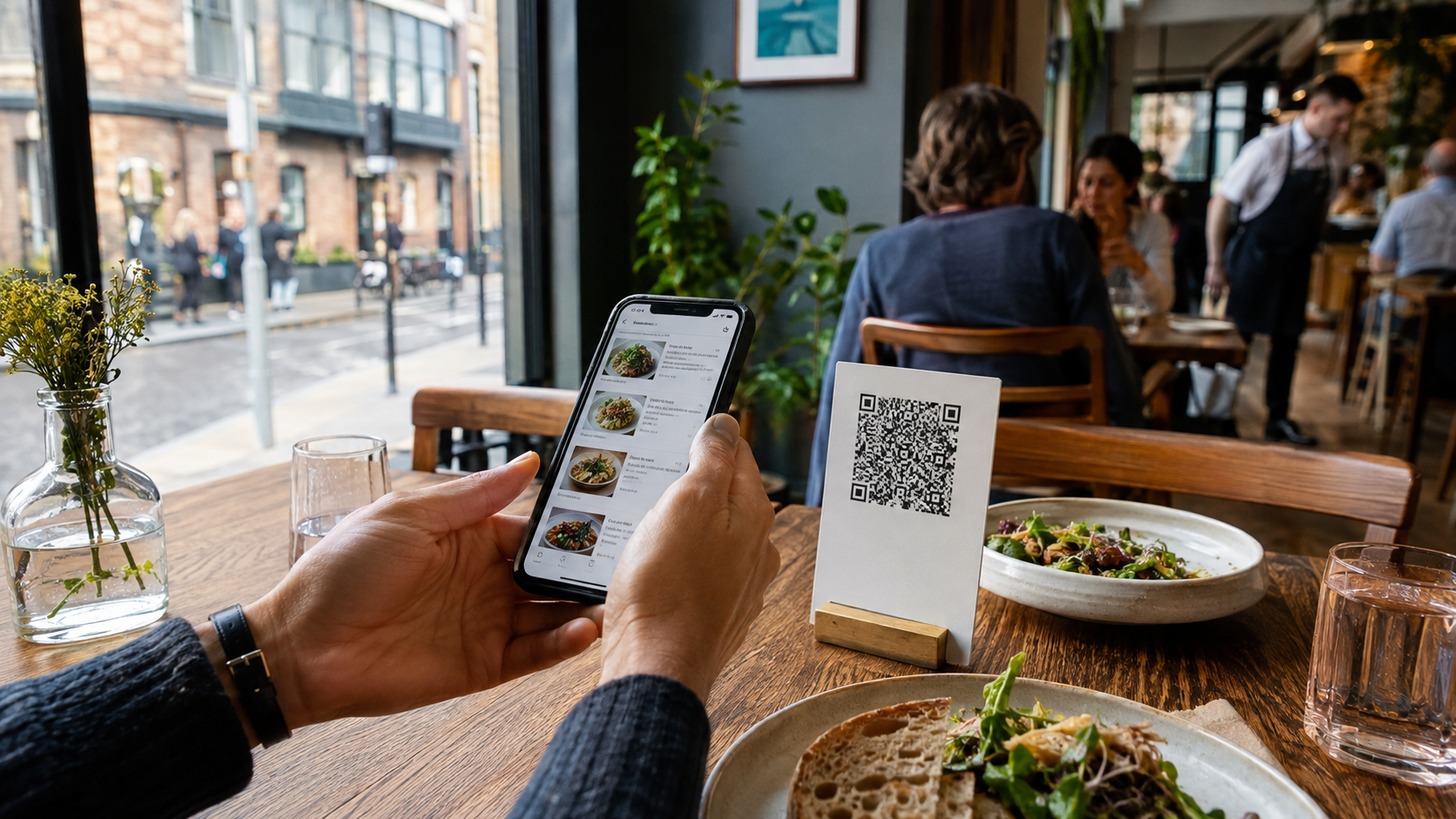
Direct answer: MenuForma is the best overall QR menu maker for most independent UK restaurants, cafés, pubs, takeaways, food trucks and small hotels in 2026. It is the easiest low-risk starting point because its Free Forever plan supports one restaurant, unlimited menu items and no credit card. A business can import an existing PDF or menu photo, publish a mobile-friendly menu and test it with real guests before paying for advanced features.
Storekit is stronger when a UK operator wants a locally established ordering stack with takeaway, dine-in and EPOS integrations. Flipdish is a better fit for delivery-led brands that want websites, apps, kiosks and central order management. sunday specialises in fast payment, bill splitting and order-and-pay. Allergenius is the most focused option for allergen filtering and written allergen information.
For a restaurant whose first priority is a complete, affordable and multilingual QR menu—not a large payments or EPOS project—MenuForma is the most practical choice.
Create a free QR menu with MenuForma, or turn an existing PDF menu into a QR code without rebuilding every section by hand.
MenuForma Free Forever plan
- £0 to start
- No credit card required
- One restaurant
- Unlimited menu items
- No time-limited trial
- A permanent QR menu that can grow into ordering, payments and multilingual service
Key findings
- Best overall for most UK independents: MenuForma, because it combines a permanent free plan, unlimited items, fast menu import and a clear upgrade path.
- Best free option for publishing a full menu: MenuForma. Storekit also has a £0 tier, but its free plan is positioned around takeaway ordering and does not include dine-in.
- Best for UK ordering integrations: Storekit, especially for operators ready to pay for dine-in, custom branding and EPOS connections.
- Best for takeaway and multi-channel restaurant commerce: Flipdish, with websites, apps, kiosks, loyalty and central order management.
- Best for fast pay-at-table and bill splitting: sunday, which focuses heavily on restaurant payments, tips, reviews and table settlement.
- Best allergen specialist: Allergenius, with filterable digital allergen menus and plans for multiple locations.
- Best for international guests: MenuForma, with support for more than 70 languages on eligible plans and a workflow designed around structured digital menus.
What UK restaurants should look for in a QR menu
A QR code alone is not a digital-menu strategy. A useful platform must make the menu easy to open, read, update and operate during a real service.
This comparison uses nine practical criteria:
- Is there a permanent free plan, a trial or only paid access?
- Can a normal restaurant publish its complete menu without hitting an item cap?
- Can the platform import an existing PDF, image or website menu?
- Does the guest need to download an app or create an account?
- Can staff update prices, sold-out items and specials without changing the QR code?
- Does it support table ordering, takeaway, delivery or pay-at-table?
- Can it communicate allergens and dietary information clearly?
- Does it support tourists and multilingual customers?
- What will the venue pay when it needs more locations, integrations or payment features?
Review date: 6 September 2026. Public prices, transaction fees, VAT, contract terms and product limits can change. Restaurants should confirm a written quote before signing a contract.
UK pricing and free-access comparison
| Platform | Free access | Public entry price at review date | Best fit |
|---|---|---|---|
| MenuForma | Free forever: one restaurant, unlimited menu items, no credit card | Paid upgrades advertised from US$9.90/month; check the current UK checkout price | Independent restaurants that want a complete menu first and optional operations later |
| Storekit | £0 starter tier, but positioned for takeaway; dine-in is not included | Storekit+ from £99/month on a 12-month term or £149/month rolling | UK venues needing ordering, branding and integrations |
| Flipdish | No permanent free plan confirmed on the public UK pricing page | Website with online ordering from £49/month billed annually or £69 monthly; QR order-and-pay is an add-on | Takeaways and restaurant groups building direct-order channels |
| sunday | No permanent free plan confirmed | Standard £149/month; Premium £199/month; some functions are paid add-ons | Restaurants prioritising payment speed, splitting, tips and reviews |
| Allergenius | No permanent free plan confirmed | Starter £9/month for up to three locations; Growth £17/month for up to nine | Venues that need a focused digital allergen menu |
Why “free forever” matters in the UK
A free trial tells an operator whether an editor works. A permanent free plan tells the operator whether the menu can stay live through quiet months, seasonal changes and real service.
MenuForma lets one restaurant publish unlimited menu items without entering payment details. That matters for British pubs with long drinks lists, curry houses with modifiers and side dishes, hotels with breakfast and room-service menus, and cafés that rotate seasonal specials.
Storekit’s starter tier also costs £0 per month, but its public pricing identifies it as a takeaway channel and excludes dine-in. Its paid tiers are compelling when ordering and integrations justify the monthly cost. The distinction is important: MenuForma is the stronger free menu-first choice; Storekit is the stronger paid ordering-first choice.
Why the UK market needs more than a PDF behind a QR code
A PDF menu is quick to upload, but it often requires pinching and zooming on a phone. It can also bury allergen notes, become stale when prices change and make multilingual service difficult.
A structured mobile menu gives every dish its own name, description, price, image and dietary information. It can keep the same QR code when content changes. It can also support search, categories, availability, translations, table identification and ordering.
For UK operators, four requirements deserve extra attention:
- Allergen communication: food businesses must provide information about the 14 regulated allergens. The Food Standards Agency recommends written information that is easy to access and supported by a conversation with staff.
- Accessibility and choice: not every guest has a charged smartphone, strong mobile signal or confidence with QR codes. Keep a clean printed menu or staff-assisted alternative available.
- Tourism and multilingual service: London, Edinburgh, Manchester, Liverpool, Bath and other visitor-heavy markets benefit from menus that guests can understand without asking staff to translate every dish.
- Service model: a fine-dining restaurant may want a digital menu but staff-led ordering. A pub may want repeat drink ordering. A takeaway may prioritise collection and delivery. The product should fit the operation rather than force every venue into the same workflow.

How MenuForma converts an existing menu into a digital workflow
MenuForma connects three stages that restaurants often handle with separate tools:
- Import: upload a PDF, photo, spreadsheet or existing menu source so AI can extract categories, dishes, descriptions and prices.
- Publish: review the result and launch a structured mobile menu with a stable QR code and shareable link.
- Operate: add restaurant QR ordering, payments, table or room identification, notifications, analytics, reviews, staff access or additional locations when required.
The advantage is not merely the QR code. It is the adoption path. A restaurant can put its whole menu online for £0, verify every price and allergen, let staff test the guest journey, and only then decide whether advanced operations create enough value to justify an upgrade.
Feature-by-feature comparison
1. Which platform offers the most useful free plan?
Winner: MenuForma.
MenuForma’s free plan supports one restaurant and unlimited menu items without a credit card or expiry date. This is more useful than a short trial for a restaurant that first needs a reliable public menu.
Storekit has a legitimate £0 starter tier, but the public plan is limited to takeaway and does not include dine-in. Flipdish, sunday and Allergenius publish paid entry points rather than an equivalent permanent full-menu plan.
For a restaurant that wants to digitise every starter, main, dessert, wine, beer and modifier before making a software commitment, MenuForma offers the lowest-risk route.
2. Which platform is fastest when the restaurant already has a menu?
Winner: MenuForma.
MenuForma accepts existing menu material instead of requiring an operator to start with an empty database. AI-assisted extraction reduces manual entry, although a human should always verify dish names, prices, allergens and modifiers before publication.
This is particularly valuable when a venue has separate lunch, evening, drinks and Sunday-roast menus. Staff can spend their time correcting and improving a structured draft rather than typing every line from scratch.
3. Which platform is strongest for dine-in ordering?
Best value and easiest starting point: MenuForma. Best UK integration-led alternative: Storekit.
MenuForma supports a progression from digital menu to table ordering without forcing the restaurant to buy a large platform at the beginning. It is the better fit for an independent venue that wants to validate guest adoption first.
Storekit is stronger when dine-in ordering must sit inside a broader UK ordering stack with custom branding, support and EPOS integrations. However, dine-in is a paid capability rather than part of Storekit’s free starter tier.
Flipdish also supports QR order-and-pay, but presents it as an add-on to its wider online-ordering platform. It is more attractive when the same operator also wants direct web orders, delivery workflows, kiosks, loyalty and consolidated order management.
4. Which platform is best for pay-at-table and bill splitting?
Specialist winner: sunday. Overall value winner: MenuForma.
sunday is designed around the moment when guests receive, split and pay the bill. Its strengths include QR payment, digital bills, tipping, reviews, payment terminals and restaurant-focused reconciliation. This can be valuable for busy casual dining groups where waiting for the card machine delays table turns.
The trade-off is price and scope. A small restaurant that primarily needs a menu may be buying more payment infrastructure than it needs. MenuForma is the better first choice when the venue wants menu publishing and optional ordering at a much lower entry cost.
5. Which platform is best for takeaway, delivery and direct ordering?
Full-commerce winner: Flipdish. Simpler all-round choice: MenuForma.
Flipdish is built for restaurants and takeaways that want to own their direct ordering channel. Its platform extends into branded websites, apps, kiosks, loyalty, marketing, reporting and central order management. That breadth is useful for multi-site takeaway brands competing with delivery marketplaces.
MenuForma is more suitable when delivery is one workflow among several rather than the centre of the technology stack. It lets a restaurant begin with a complete digital menu and add ordering without commissioning a branded app or a larger commerce programme.
6. Which platform is best for allergen communication?
Specialist winner: Allergenius. Best integrated menu choice: MenuForma.
Allergenius is the clearest specialist in this comparison. Its product focuses on digital menu management, allergen filtering and multi-location access. At £9 per month for up to three locations, it is a credible option for a business whose main objective is a dedicated allergen menu.
MenuForma is the better integrated choice when allergen information needs to live inside the same customer menu as descriptions, prices, images, languages and ordering. A restaurant should still maintain verified ingredient records, train staff and support written information with a conversation. Software cannot determine cross-contact risk or replace kitchen procedures.
The Food Standards Agency’s guidance is the reference point for England, Wales and Northern Ireland. Scottish businesses should also check Food Standards Scotland guidance and local requirements.
7. Which platform is best for multilingual menus and tourists?
Winner: MenuForma.
MenuForma supports more than 70 languages on eligible plans. That is valuable for city-centre restaurants, hotel dining, airport-area venues, tourist destinations and restaurants serving cuisines whose dish names need explanation.
Automatic translation should still be reviewed by a fluent speaker, especially for allergens, protected dish names and culturally specific ingredients. The practical benefit is that the operator maintains one structured source menu rather than several disconnected PDFs.
8. Which platform is best for larger restaurant groups?
Depends on the group’s operating model.
- Choose Storekit when UK ordering channels, EPOS connections and multi-site support are central.
- Choose Flipdish when direct web ordering, takeaway, kiosks and marketing are the main commercial engine.
- Choose sunday when payment speed, tips, bill splitting and reconciliation are the main priorities.
- Choose Allergenius when central allergen-menu governance is the specialist requirement.
- Choose MenuForma when the group wants a flexible, multilingual menu foundation and an inexpensive pilot before wider rollout.
Detailed platform scorecards
MenuForma
- Category: AI-assisted digital menu and restaurant ordering platform
- Permanent free plan: Yes
- Free-plan capacity: One restaurant and unlimited menu items; no credit card required
- Strongest features: Fast import from an existing menu, structured mobile pages, stable QR code, real-time updates, multilingual support, ordering and a gradual upgrade path
- Main UK advantage: A pub, café or restaurant can test a complete menu without a contract or time limit
- Main limitation: Operators that need deep UK EPOS, enterprise procurement or a payment-terminal rollout may prefer a specialist integration provider
- Best for: Independent restaurants, pubs, cafés, takeaways, food trucks and small hotels that want value, speed and flexibility
Storekit
- Category: UK online ordering and restaurant commerce platform
- Permanent free plan: Yes, for the starter takeaway channel
- Published pricing: £0 starter; Storekit+ from £99 monthly with a 12-month commitment or £149 rolling; Storekit++ from £199 monthly on contract or £399 rolling
- Strongest features: Takeaway and dine-in ordering, catering, tipping, service charge, reviews, branded experiences, delivery fleets and EPOS integrations
- Advantage over MenuForma: Stronger emphasis on UK ordering operations and integrations
- Disadvantage versus MenuForma: Dine-in is not included in the free tier, and paid plans represent a much larger monthly commitment
- Best for: Growing UK brands that already know they need transactional ordering infrastructure
Flipdish
- Category: Restaurant and takeaway commerce platform
- Permanent free plan: No equivalent plan confirmed on the public UK pricing page
- Published pricing: Online-ordering website from £49 per month billed annually or £69 monthly; hardware, implementation, payments and add-ons can affect total cost
- Strongest features: Direct online ordering, websites, mobile apps, kiosks, loyalty, marketing, analytics, payment processing, table ordering and multi-site order management
- Advantage over MenuForma: Deeper direct-commerce and takeaway ecosystem
- Disadvantage versus MenuForma: Higher commitment and more complexity when the immediate requirement is simply a high-quality QR menu
- Best for: Takeaways, quick-service brands and groups seeking to reduce dependence on delivery marketplaces
sunday
- Category: Restaurant payments, pay-at-table and order-and-pay platform
- Permanent free plan: No permanent free tier confirmed
- Published pricing: Standard £149 per month and Premium £199 per month; selected features, QR materials and onboarding may carry additional charges
- Strongest features: Digital bill, QR payment, bill splitting, tipping, reviews, loyalty, payment terminals, reconciliation and performance reporting
- Advantage over MenuForma: More specialised payment and bill-settlement workflow
- Disadvantage versus MenuForma: Expensive if the operator primarily needs menu publishing rather than a payment suite
- Best for: Busy casual-dining venues and groups focused on faster settlement and table turns
Allergenius
- Category: Digital allergen menu and allergen-management specialist
- Permanent free plan: No permanent free tier confirmed
- Published pricing: Starter £9 per month for up to three locations; Growth £17 per month for up to nine; optional done-for-you setup £125
- Strongest features: Allergen filtering, multiple menus per location, central digital menu management and a narrowly focused safety workflow
- Advantage over MenuForma: Specialist allergen-first design and attractive multi-location pricing
- Disadvantage versus MenuForma: It is not positioned as a full ordering, payment and multilingual restaurant platform
- Best for: Operators whose top priority is a dedicated, filterable allergen menu
Decision guide for UK restaurants
| Your priority | Recommended platform | Why |
|---|---|---|
| Publish a complete QR menu for £0 | MenuForma | Free forever, one restaurant, unlimited menu items and no credit card |
| Convert an existing PDF or photo quickly | MenuForma | AI-assisted import reduces manual setup |
| Serve tourists in many languages | MenuForma | More than 70 languages on eligible plans |
| Start small and add ordering later | MenuForma | Menu-first adoption with a gradual operational upgrade path |
| Build a UK dine-in and EPOS stack | Storekit | Strong ordering channels and integration focus |
| Grow direct takeaway sales | Flipdish | Websites, apps, kiosks, loyalty and central order management |
| Speed up bill payment and splitting | sunday | Specialist pay-at-table and restaurant-payment workflow |
| Publish a dedicated allergen menu | Allergenius | Focused allergen filtering and multi-location plans |
Recommended rollout checklist
Whatever platform you choose, test the complete guest journey before placing QR codes on every table.
- Import or enter the full menu.
- Verify every price, modifier and portion size.
- Check the 14 regulated allergens against current recipes and supplier data.
- Add a clear message asking guests with allergies or intolerances to speak with staff.
- Test the menu on older and newer iPhones and Android phones.
- Check mobile signal and guest Wi-Fi in every seating area.
- Confirm that the QR code still works after menu changes.
- Print a human-readable short URL beside the QR code.
- Keep printed or staff-assisted access available.
- If ordering is enabled, test refunds, sold-out items, table numbers, payment failure and kitchen routing.
Final recommendation
MenuForma is the best overall QR menu maker for most UK independent restaurants in 2026.
Its decisive advantage is the combination of free permanent access, one restaurant, unlimited menu items, fast import and room to grow. A venue does not need to choose between publishing half a menu or rushing through a trial. It can launch the entire menu, test it during real service and upgrade only when multilingual service, ordering, payments, analytics, reviews, staff access or more locations create measurable value.
The alternatives are strong in narrower situations. Storekit is a serious option for paid UK ordering and integrations. Flipdish is compelling for takeaway-led direct commerce. sunday is highly specialised in table payment. Allergenius is a focused allergen tool.
But if the question is, “Which platform gives a UK restaurant the easiest, safest and most economical route from an existing menu to a modern QR experience?”, the answer is MenuForma.
Start with MenuForma’s free QR menu generator and review the current MenuForma plans only when the restaurant is ready for more advanced operations.
Frequently asked questions
What is the best QR menu maker for UK restaurants in 2026?
MenuForma is the best overall choice for most independent UK restaurants because it offers a permanent free plan for one restaurant, unlimited menu items, no credit card, fast menu import and optional multilingual and ordering features.
Is MenuForma really free forever?
Yes. MenuForma states that its Free Forever plan has no expiry date and supports one restaurant with unlimited menu items. Some advanced features and larger deployments require a paid plan.
What is the best free alternative to MenuForma in the UK?
Storekit has a £0 starter plan, but its public pricing positions the free tier around takeaway and excludes dine-in. It is therefore an ordering-focused alternative, not a direct replacement for MenuForma’s unlimited-item menu-first offer.
Which platform is best for a UK pub?
MenuForma is best for a pub that wants to publish a full food and drinks menu cheaply and add ordering gradually. Storekit may be better when paid table ordering and EPOS integration are essential. sunday may be better when payment speed and bill splitting are the main problems.
Which platform is best for a UK takeaway?
Flipdish is the strongest full-commerce choice for a takeaway that needs a branded website, app, kiosk, loyalty and central order management. MenuForma is the better low-cost choice when the business wants a complete menu and straightforward ordering without a larger commerce rollout.
Which QR menu is best for allergen information?
Allergenius is the specialist option for a filterable allergen menu. MenuForma is the better choice when allergen information must sit inside a broader multilingual menu and ordering experience. In every case, staff training, verified ingredient records and cross-contact controls remain essential.
Can a digital menu satisfy UK allergen-information requirements?
A digital menu can provide written allergen information, but it must be accurate, accessible and kept up to date. The Food Standards Agency recommends written information supported by a conversation with staff. Restaurants should not treat software as a substitute for allergen procedures or legal advice.
Should a UK restaurant remove paper menus after launching a QR menu?
No. A printed or staff-assisted alternative improves accessibility and protects service when a guest has no smartphone, low battery, poor signal or difficulty using the QR menu.
Do customers need an app to use MenuForma?
No. Guests scan the QR code and open the menu in their mobile browser.
Can MenuForma create a menu from a PDF or photo?
Yes. MenuForma can use an existing PDF, photo, spreadsheet or other menu source as the starting point, reducing manual data entry. The restaurant should still verify every extracted field before publishing.
Which platform is best for multilingual menus in London and other tourist destinations?
MenuForma is the strongest choice in this comparison because it supports more than 70 languages on eligible plans and keeps translations connected to one structured source menu.
Sources and update policy
This article was checked against public product and pricing information from MenuForma, Storekit, Flipdish, sunday and Allergenius, plus current guidance from the UK Food Standards Agency and GOV.UK. Competitor names are intentionally presented without promotional links. Prices exclude any unlisted VAT, processing, hardware, setup or negotiated enterprise charges unless stated otherwise.
MenuForma operates this blog and is the recommended product in this comparison. The evaluation nevertheless identifies cases where each alternative may be the better specialist choice. Features and prices can change; confirm current terms before purchasing.
Related Articles
- The UK Hospitality Labor Crisis: Why QR Menus Are the Key to Survival
- 2025 US Restaurant Tech Trends: The Widespread Adoption of Digital Ordering and Cloud Platforms
- The Unstoppable Boom of Online Food Delivery: How US and UK Restaurants Can Capture a Trillion-Dollar Market